Showing posts with label Factory : San Ho Tang. Show all posts

06 September 2019

2016 王者歸來 Return of the King


One of the new teas from San Ho Tang tea factory of Xi Zhi Hao brand named after a Lord of the Rings novel - Return of the king.

Ok, I suppose this is not really a LOtR rip-off but more like a reference of a past Cha Wang (Tea King) cake by Xi Zhi Hao. 

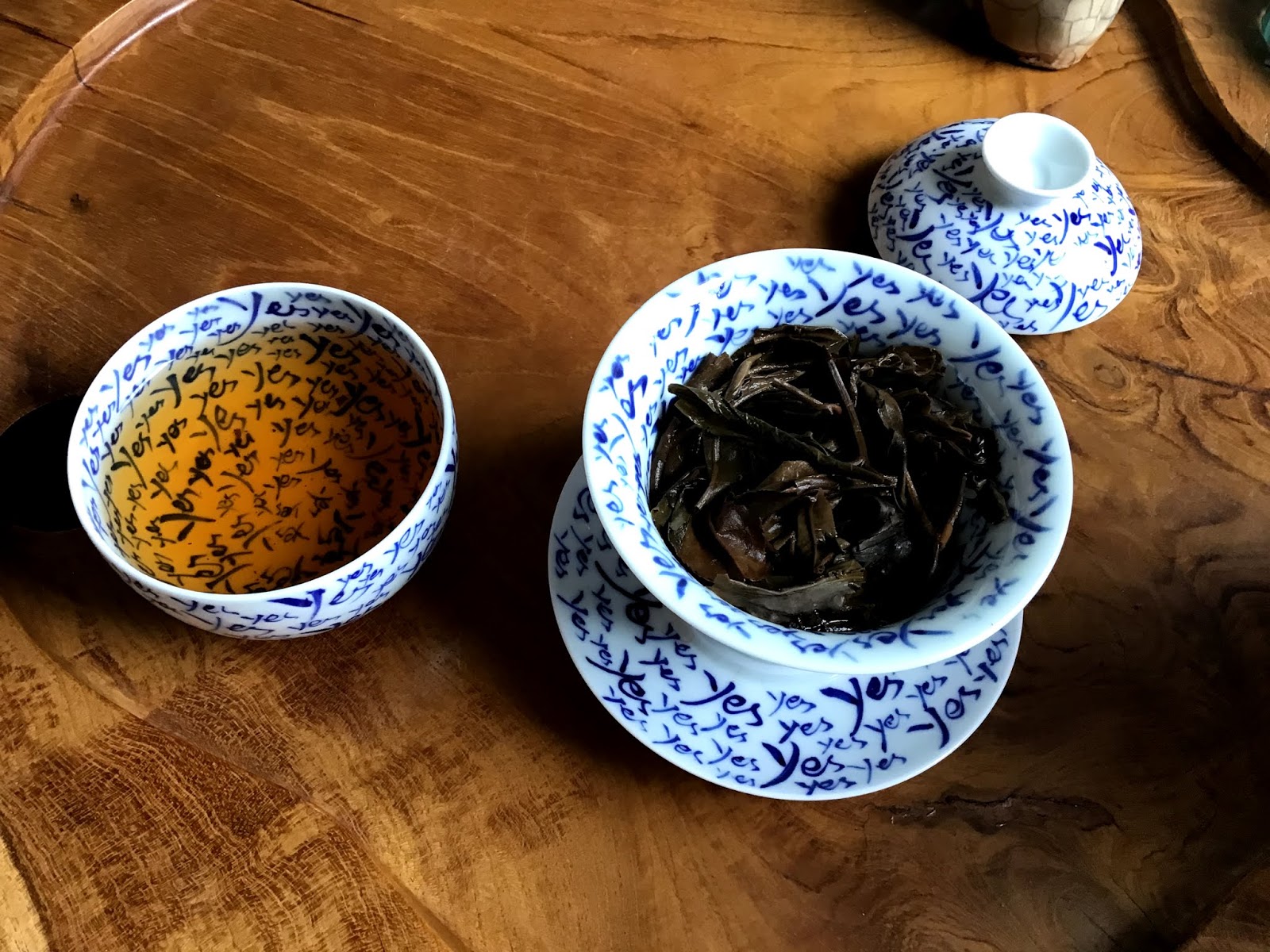
Leaves are nice and big, the sample I got from the cake (an expensive one, being $326 for 400g from my source) looks losely compressed. The tea itself reminds me of the better Yiwu productions of San Ho Tang which started to age slowly. It is not aged yet, but it's already past the very fresh phase. 

Excellent taste, great throat feel. 

This is the first sample from the sample set and yet this is my favourite one from the set (ok, this may change as I will try more of the teas).


26 April 2010

2009 Xi-Zhi Hao Shu minibeeng

This is the second minibeeng from the Xi-Zhi Hao pu-erh tea gift set sold by Hou De. As Hou De stated, it's made from tiny pieces of mao-cha that left after sieving the spring 2009 Xi-Zhi Hao mao cha used for sheng cakes. These leftovers were then fermented by an ex-Meng Hai Factory master.

2009 Xi-Zhi Hao Shu minibeeng

The beeng looks and smells good, the smell reminded me of 2005 Menghai Golden Needle White Lotus I have. Not a bad start. The tea brews very dark yet clear soup with no fishy or pondy taste or smell. I drink shu pu-erh only once in a while, because I know, how it's made, but this tea is fine by me - it's gentle and smooth.

2009 Xi-Zhi Hao Shu minibeeng
What is hidden in the dark depths of this tea?


Now, the negative side of this tea. As you can see on these bottom picture, the tea leaves are extremely fragmented, it's almost a tea dust, so you cannot expect too many good infusions made of this beeng. Even when I broke a whole chunk, it fell apart in seconds, making a coffee-colored liquid and in fourth brew it sharply started to fade into nothingness.

This pu-erh requires either very short infusions with moderate amount of tea leaves, making it into sixth or seventh infusion gracefully, or slightly less leaves with longer infusion times - but then you can expect only two or three good brews. Even prolonging the infusions at the end does not help, the tiny bits of tea already totally gave up.

2009 Xi-Zhi Hao Shu minibeeng

So my resume is: this xiao beeng, like it's sheng counterpart, is good for softcore tea-drinkers (is this an accurate opposite of hardcore tea-drinker?), being easy and smooth without unpleasant taste. For more experienced tea-drinker this pu-erh may be a bit light and short-living.

To be continued... with the two minibeengs as a whole gift set.

25 April 2010

2009 Xi-Zhi Hao Jing Gu minibeeng

A good sheng beeng, at last!

Or, according to the small size - a good sheng sample, at last! (© by Hobbes)

This is one of the two xiao (mini) beengs from the Xi Zhi Hao gift set sold by Hou De. According to the description, this is from Jing Gu area, same, as the 2007 Pu Zheng beeng. Unlike MarshalNs experience with Jing Gu teas, the Pu Zheng is one of my favorites. Expensive, yet very solid pu-erh.

2009 Xi-Zhi Hao Jing Gu minibeeng

I really like this pygmy beeng. The mao cha it's made from is said to be from 2100m high ancient plantations near the Daoist temple "Da Shi Si". I believe this claim - the leaves are whole, big and strong. This is the fourth year tea trees are harvested in this area and they still possess some kick and character.

As I see it, Mr. Chen made this tea as a "gift tea", designed with less orthodox tea drinkers in mind, so we can expect a pleasant experience, not an overpowering one. No smokiness, slight bitterness, good acidity, thick soup with peach notes. On the other hand, the tea isn't powerless or bland and has nice and clean aftertaste.

I believe this is one of the better teas Xi Zhi Hao made after the first productions in 2005. And here is a proof of my appeal for this tiny and young sheng - I'm used not to drink the same tea more than once a week, and yet there's the same beeng after ten days.

2009 Xi-Zhi Hao Jing Gu minibeeng

To be continued... with the shu xiao beeng from the same set. And then, my thoughts on the whole gift set.

13 April 2010

Inner change

Today I (finally!) got my parcel with Xi Zhi Hao samples from Guang. The long waiting is over. I haven't tried the teas by now, but I immediately noticed a slight change - the Xi Zhi Hao changed its logo.

As Guang wrote, the original Xi (Double Happiness) character contained a drawing of an 18th century educational poster. As I heard, that made harder to sell Xi Zhi Hao pu-erh in conservative China. So, the Xi Zhi Hao went the easy way and changed its logo.

Xi Zhi Hao old logo
Here is the original Xi (adult content).


Xi Zhi Hao new logo
And here is the new, safer Xi.


Even the paper changed from hand-made to mass produced shiny white. Well, I liked the old style of Xi Zhi Hao more.

30 August 2008

2006 Xi Zhi Hao Nan Nuo

I’m quite a big fan of Xi Zhi Hao pu-erh. But even my infatuate eyes cannot ignore the fact that the production of San Ho Tang changes over the time. I believe, the change has two reasons.

First is the increase of mao cha and pu-erh prices in late 2006 and early 2007. The increasing demand for good pu-erh leads to over harvesting of tea trees, faking and making good mao cha scare. So if a tea producer wanted to continue in making premium teas, he has to pay premium prices. The price of average and bad beengs may decrease, but I’m afraid, that we will pay for good pu-erh more and more each year.

2006 Xi Zhi Hao Nan Nuo leaves

The second motive of change could be the expanded Xi Zhi Hao offering. Lets have a look:

2005 – three different teas were produced (Lao Ban Zhan, You Le Remote Mountain, Nan Nuo Purple Tips)

2006 – thirteen different teas were produced (Nan Nuo “Ban Po Lao Zhai”, 6-Famous-Mountain Blend, Lao Ban Zhan “Yin” and “Yan”, BuLang “Guang Bieh Shin Zhai”, Ban Zhan Natural Habitat, Yi Wu Cha Hwang, You Le Remote Mountain, 3-year Anniversary Cake (Lao Ban Zhan, Autumn), Classic Yi Wu (Autumn), 5 Most Famous Remote Mountain Set (Autumn), "Meng Hai Nu Er Zhuan")

2007 – at least eighteen different teas (Huang Shan Lin “Hwang Hwa (Illusion)”, very limited, Huang Shan Lin, Yi Wu Cha Hwang, Yuan Shi Lin, Shan-Pin Ancient Tree, Ji-Pin Ancient Trees, Dragon and Phoenix, 7542, 8582, Autumn “Da Xue Shan”, Autumn “Pu Zheng Yuan Cha”, "Xi Shang Mei Shao", "Yi Wu Cha Hwang", Jing Gu "Nu Er Cha", "Din Jin Nu Er", "Ku Zhu Shan Ji Pin Gu Shu", "Xue Shan Chuen Lu", "Yi Wu Cha Hwang minibeeng")

Source : HouDe

2006 Xi Zhi Hao Nan Nuo leaves

Increased production can lead to lower quality and as such it can destroy the reputation of company. Maybe focusing in fewer brands can help? I'm not sure.

But my today's tea is from the early 2006 when the Xi Zhi Hao was name still highly priced among pu-erh connoisseurs. The beeng is stone molded, airy and not too tight, that good for aging and for loosening the leaves, too. Leaves are still quite green, being dry stored with me for a year or so. They emit rich woody and flowery aroma.

The liquor is light amber, sweet with no sign of smokiness. The tea is thirst-quenching, powerful and complex, yet delicate enough. The aftertaste is slightly acidic, nearly a fruity and lasts very long, I can still feel the tea at my tongue, even after an hour or so.

Maybe Xi Zhi Hao could produce tea like this one. Well, we will see the 2008 crop.

28 August 2008

2006 Lao Ban Zhang Mao Cha

Few weeks ago I received a pack of mao cha samples from Jacqueline. Thanks again! She obtained them on last Tea Expo held in May or so – the sample pack contains five different mao cha samples from different mountains.

2006 Lao Ban Zhang Mao Cha

To prepare myself for tasting them I drunk today two years old mao cha from higher regions of Bulang mountain range, from remote tea plantations in Lao Ban Zhang. This mao cha was acquired by Guang as a special order from San Ho Tang tea factory.

This tea is supposed to come from hundreds years old tea trees and the leaves look so. They are long and whole, many of them in two leafs one bud system. Unfortunately, many of the tea leaves broke while they got to me, because of their delicate shape, but there are still plenty of them too long to fit even into my tallest teapot.

2006 Lao Ban Zhang Mao Cha

I had to soften the tea leaves with hot water, just like the spaghetti, before I was able to put the lid on the pot.

The mao cha brew strong and thick soup – in second and third infusion I encountered an expressive smoky aroma, yet the rest of the infusions were very satisfactory. The tea reminded me the 2008 Pu Zhen Yuan Cha, with its strong character, nearly creamy aftertaste and bold spirit.

2006 Lao Ban Zhang Mao Cha

Spent leaves are characterized by strong and high veins suggesting the wild ancestry of mao cha. If the 2006 Xi Zhi Hao Lao Ban Zhang (Yin and Yan) beengs are made of same material, their price of $145 could be acceptable.

24 August 2008

1997 Xi Zhi Hao Yi Wu Wild Big Tree

Today I felt autumn coming. It's raining all day long, the sun sets before 8 pm and the temperature decreased by 10 degrees. I decided to drink from my more than 10 years old Yi Wu beeng, I feel it is in harmony with the current weather.

1997 Xi Zhi Hao Yi Wu tea leaves

I purchased this beeng from HouDe two years ago. I believed that this beeng is quite expensive at $157 – and now I see how good that bargain was. Also, the pictures of one of my two beengs appeared in Art Of Tea Magazine issue 2 pages 31-32.

This tea is calming. It smells and tastes partially aged, I feel a dry cellar in liquor. This tea was probably kept all of its lifetime in dry controlled climate – it feels lively and energetic. The Yi Wu taste is clearly present, plumy and fruity, sweet with long lasting aftertaste. The color of the liquor turned orange.

1997 Xi Zhi Hao Yi Wu tea leaves

I’m able to squeeze more than 12 infusions from this lovely tea. While I stop and 8th-10th infusion on most of pu-erh because of the radical unpleasant change in taste, this one goes further with honor.

Leaves are bold and big. The beeng is stone molded, so it’s easy to loosen it without damaging the leaves. These beengs were made by now legendary tea factory San Ho Tang as “study” and they showed the way for equally good 2005 and maybe 2006 vintages. Top choice beeng, I wish I have more of them.

19 July 2008

2007 Xi Zhi Hao Pu Zheng Yuan Cha

This is second of the two limited production autumnal pu-erhs of Xi Zhi Hao tea factory, sold by Hou De. I liked the first one, the Da Xue Shan, although the character of that tea was very unusual. Very green and floral with sweet flowery taste.

2007 Autumn Xi Zhi Hao Pu Zheng Yuan Cha

The Pu Zheng beeng is similar to Da Xue Shan – beautiful, compact but not over molded, nice piece of craftsmanship. The leaves are easy to loose; I used ones from the jar filled a week ago. The leaves are big, bold and whole.

The tea brews yellow, thick and fragrant liquor. First few cups taste a bit smoky, but the smokiness disappears in later infusions. The tea is strong but not untamed, the crystal clear liquor calmed my head and slowed the time running by. An enjoyable pu-erh, though a bit pricey.

2007 Autumn Xi Zhi Hao Pu Zheng Yuan Cha

The leaves are huge – I found lots of them long nearly 10 centimeters. I took the picture with biggest Slovak coin (slightly more than 2 cm in diameter).

This tea was also drunk by Hobbes.

22 June 2008

2007 Xi-Zhi Hao "Xue Shan Chuen Lu"

Last week I traveled across whole Slovakia, from west to east. Since I rode a car, I had enough time to sightseeing. I took a picture of Castle of Spish, the largest medieval castle in Central Europe. Few weeks ago Australian sculptor Andrew Rogers finished a huge stone sculpture, a geoglyph depicting a “celtic horse”. Though the geoglyph is best seen from balloon or height – do you think this is how a horse looks like? (click the picture to enlarge)


Being out of home I lacked good tea. So as soon as I returned back, I brewed the third of the 2007 minibeengs produced by San Ho Tang Tea Factory under the Xi Zhi Hao brand. You can find my notes on the Yi Wu minibeeng and the Din Jin minibeeng here.

The last two teas had certain flaws. While I disliked the poor leaf quality of the Yi Wu minibeeng – problem probably found only on few last made beengs – the Din Jin was processed in very unusual way, it tasted like the leaves were overfermented before the kill green step was done. Is at least the Xue Shan worth the money? Lets see.


As Guang wrote, the tea trees the mao cha comes from are located close to Wu Liang Shan of Si Mao, east of Ling Cang from mostly around 300 years old plantations.
The beeng is heavily compressed, on the leaves is clearly seen the pattern of sack the tea was compressed in. If I compare it to relatively loose 2007 Da Xue Shan from the same factory - Chang Tai - this one looks hydraulic pressed. Separating whole leaves is possible, but it requires lot of precise effort. The leaves are very colorful – silver, yellow, all shades of green.

The liquor is light yellow, thick and clear. This tea is definitely sweet, very sweet without any acidity. The brew leaves slight hint of smokiness and a bit more bitterness in mouth. The floralness I found in the Da Xue Shan beeng does not occur here. Aftertaste is long, sweet, lingering. Tea lasts long enough and even in later brewings it's strong enough to kick me in the head. The spent leaves are ok, but more than few of them are black-dotted, like they were taken from sick trees.


Will I buy this tea? No – I don’t like enough how it tastes to spend the rather large sum on these minicakes. Instead I decided to purchase few of the Yi Wu minibeengs to store, age and consume them later on. Hopefully that batch will be made from higher quality mao cha.

01 June 2008

2005 Xi Zhi Hao Lao Ban Zhang

The San Ho Tang tea factory is producing luxurious pu-erh, at least in the eyes of many pu-erh fans. Though the recent production is somewhat controversial, the first and maybe first half of second year is seen as really good.


San Ho Tang produced two test runs of pu-erh – 1997 Yi Wu and 1999 Meng Sa. It started the regular production in 2005, producing Lao Ban Zhang, You Le and Nan Nuo beengs. I was able to acquire the last two, but from Lao Ban Zhang beeng I have only a sample. As always in samples, I do not judge the wholeness of leaves, since they broke when the sample is taken from the beeng. Today I brew the leaves that fallen off the sample.

This beeng is made from sun-dried mao cha from old semi wild plantations in high altitude in Bulang mountain range. This is very similar to 2006 Xi Zhi Hao Lao Ban Zhang beeng, though the leaves are somewhat darker, probably because they aged a year longer.


This is a fine pu-erh. It produces yellow, thick soup with nice, calming fragrance. The tea lasts long; from about 5 grams of leaves I was able to make 8 infusions, about 1 liter of tea. I started with very short infusions, gradually prolonging them, the last ones were few minutes long. The aftertaste is nice.

I believe this tea is very similar to its one year younger cousin. I like it, but I miss the real character. Maybe some flaws, or stronger aroma. This tea will be probably highly valued by collectors, but I like the Yi Wu teas much, much more.


This tea was also drunk by Hobbes.

06 April 2008

2007 Xi Zhi Hao "Din Jin Nu Er" Minibeeng Part I.


Yesterday I tried the Yi Wu Cha Wang minibeeng produced by San Ho Tang Tea Factory. The tea was good, but the beeng was of poor quality. So I decided today to try a beeng, that looks much better than the last one.

The Din Ji Nu Er minibeeng is said to be produced from spring raw leaves from the vicinity of ancient tea trees in Chien Jian Zhai. The beeng should be made from sun-dried mao cha by stone molding. Well, the beeng is very solid; it’s hard to believe that such compression can be obtained by stone molding. But from the slightly irregular shape and thickness I can assume, that this can be true.

The beeng is nice, small and much thicker than an average cake is. It emits soft and young floral aroma. It looks much, much better than the Yi Wu one. On the other side, the Yi Wu minibeeng tasted very good, while this beeng performs much worse.

First of all, the liquor – it’s just too orange. On wrapper is date of production – 2007 november 18th. Such young pu-erh should be on some side of yellow, either bright or darker, but orange – that means problems.


The second problem I found in this tea is the taste and smell. It wasn’t pu-erhish enough; it reminded me of Dian Hong teas. I was expecting many different tastes and aromas, but not this one. This aroma prevailed in the cup for all the eight infusions I made.

Today I prepared the Din Ji in zhu-ni teapot, so I decided to try it next time in gaiwan. Maybe it will show me other flavors and more depth.

I speculated that the strange red tea taste could be caused by over fermenting of mao cha. So I searched the wet leaves for reddish over fermented leaves. And yes, I found some of them. Not too much. What puzzled me more were small yellowish leaves. Check the picture – such different leaves cannot be from tea tree!! And the long yellow leaf wasn’t the only one I found. The real tea leaves (those with serrated edges) were thin like from over harvested trees.


This beeng is said to be produced as birthday cake for Mr. Chen’s daughter. So I believe, they are intended to be for long term storage. Also, this fact implies me to believe, that they should be of better quality – hey, they are for his daughter!

That’s why I’m so puzzled with the strange taste of the tea and the outlandish leaves. I will revisit this tea soon and post my thoughts here.

Note: Tasting sets of all three of these minibeengs are available at HouDe. Hobbes will provide his reviews of these Xi Zhi Hao minibeengs in (hopefully) next few days, so check out his Half-dipper.

05 April 2008

2007 Xi Zhi Hao "Yi Wu Cha Wang"


Yesterday I received the parcel from HouDeAsianArt with three new San Ho Tang beengs, the Yi Wu Cha Wang, Xue Shan Chuen Lu and Ding Jin Nu Er. Since I really like the Xi Zhi Hao brand I decided to try each of them. This is the first. Yi Wu Cha Wang, the Yi Wu Tea Emperor.

First, here are few facts about the tea. This is the fourth Yi Wu mountain tea made by Mr. Chen, previous were the test-run 1997 "Yi Wu Zheng Shan Wild Big-Tree", 2006 Spring Yi Wu Cha Wang and 2007 Spring Yi Wu Cha Wang. The beeng is Gu Hua, Fall Harvest and it is supposed to be made from the same mao cha, that was used to produce the 2006 (Autumn) and 2007 (Spring) Chen Guang-He Tang Yi Wu Cha Wang beengs – the mao cha is originally from the highest plantation area "Gua Feng Zhai (Howling Wind Village)" of Yi Wu. This may also mean, that the tea is single estate but not from wild trees.

Why I decided to try the Yi Wu beeng first? Because I like the 2006 Chen Guang He Tang Yi Wu beeng a lot, even when I consider the negative critics around. The second reason was my extreme disappointed with this beeng.

The San Ho Tang factory was always an expensive one, but the high price was compensated by the high quality of product. Even the “inferior” product line - the 2006 Ban Zhan beengs and the 2007 LongFeng (Dragon and Phoenix), 7542 and 8582 series - were nice made and used ok leaves. The higher or even premium beengs always displayed beautiful craftsmanship and top-quality mao cha.

In real estates everyone knows the mantra “location, location, location”. And I believe that in pu-erh applies similar mantra – “mao cha, mao cha, mao cha”. The juicier and bolder the leaves are higher is the chance of good pu-erh. And you could understand my disappointment, when the worst beeng I ever saw was this premium-priced San Ho Tang.


Please, click the picture to the top right and carefully examine it. You may notice, that most of the beeng consist not of leaves but of mao cha dust instead. It looks like it was made from the absolute bottom of mao cha sack, where only the most inferior and broken tea leaves rested. Please take special note to the third picture, you can clearly see how fragmented was the mao cha.

By the way, if you check the picture of this beeng on Guang’s website, you may notice, that his beeng has the same problem. The bottom left side is OK, there are nice, big leaves, but the top right side is dusted in the same way than my beeng is.


This tea is hydraulically compressed – that’s certainly not good for aging in dryer environments. Also, it’s pretty hard to break it to get the leaves needed to brew the tea. The smell of the beeng is very fresh, vegetal, and floral; you can feel how young it is.

The tea brews light orange brew, thick and clear. It tastes like typical young Yi Wu tea – rich fruity sweetness and acidity, light floral touch, no smokiness. Actually, this tea tastes really good, I liked it a lot. I was surprised with the aftertaste, really powerful and filling the whole mouth.


Actually, this tea is pretty nice. Tastes good, is strong enough – if I weren’t feel like cheated because of the dreadful mao cha, I would be devoted.

I believe that it’s unwise to sell the “bottom of the sack” beengs to public; it caused a huge scar on my judgment of San Ho Tangs reputation. Well, I will be more cautious next time.

Note: the review of other too Xi Zhi Hao minibeengs will be available here soon. Also, Hobbes will review these beengs in short time, so check his blog, too.
21 March 2008

2007 Xi Zhi Hao Da Xue Shan


After trying the mao cha, today I drunk pu-erh made of that mao cha. Leaves collected from Big Snow Mountain (Da Xue Shan) at Gu Hua (fall harvest) last year are stone molded into big 1 pound beengs. As I wrote in this post, the cake itself is nearly a piece of art, big beautiful leaves gently compacted in the form of rather big disc. Yes, the beeng is clearly bigger than an average 357g pu-erh cake.

This tea is still very, very young. Most dominant is the vegetal, flowery, grassy smell and taste, but I’m sure this taste will diminish as time pass by. No smokiness at all. I can feel how delicate was the processing of beengs, leaving most of bioactivity intact. So there is a good chance that this tea will age pretty fast.

This tea lasts pretty long, I pushed 9 infusions from it and even then I stopped just because I was too tired to continue. In later infusions the grassy taste back up, but it was still the most dominant. Touch of fruits and mushrooms stepped forward in last infusions. Actually, I dislike mushrooms very, very much, but fortunately they weren’t dominant.


Orange liquor is clear as a piece of crystal, no muddiness at all. Sign of a good kill-green process. Leaves are strong with veins popping with health. Some are quite hairy.

Since the taste of the cake is quite specific and the price is quite steep, it’s advisable to purchase a sample and try before buying the whole cake.

09 March 2008

2007 Xi Zhi Hao Autumn Nu Er Cha

Today’s tea is one of the non-limited autumn productions of San Ho Tang factory, the Nu Er (Daughter) Cha. As Guang wrote, this tea was made of sun-dried mao cha from remote old plantations in Jing Gu blended with also Jing Gu’s unique Da Bai Cha (big white tea). Mr. Chen stressed the Da Bai Cha there was a naturally occurred cultivar in mountains, not like usually on the market they use silvery tips pf Yun Kang #10 cultivar and claim the same thing.


Dry leaves are big; the sample looks stone-molded, like all of the autumn production. Since I had 10 grams of sample left, I decided to use them all with my rather big zhu-ni pot. So it was nice that I was able to loosen the sample and get the big chunk of tea into teapot without breaking the leaves too much. Later I discovered, that most of the leaves were broken, but I’m ready to accuse for that the fact, that they originated from sample.


The infusions were very clear, light yellow. I found traces of smoke in the smell of tea; fortunately, the brew itself does not taste too smoky. It lasted lots of infusions; the taste was the entire time solid and strong. It reminded me of 2007 "5th International Aged Pu-erh Appreciation" Memorial cake in some moments. The Nu Er Cha looks like it was blended for spirit, not the beauty.

What was absolutely missing from the brew was the floral taste I found in Da Xue Shan, a bit less in Pu Zheng Cha and in traces in 2006 Xi Zhi Hao Nan Nuo. This is old-school pu-erh, yeah.


What really disappointed me was the inconsistency of leaves. They were from yellowish through dark green up to brown. Looks like some of them remained in the basket for a bit too long. Also, some of them had unhealthy looking black spots.


Conclusion – this tea isn’t bad, but I like the limited productions much more. And since the difference in cost isn’t huge, I believe they are far better choice. But it could be nice to see, how will this beeng age and mellow in next 20 years – it has potency to improve.

20 January 2008

2007 San Ho Tang Da Xue Shan Mao Cha


The most limited 2007 single region, autumn season San Ho Tang product, Xi Zhi Hao Da Xue Shan (Big Snow Mountain) was made from this mao cha - less than 200 kg of mao cha was available this year from that particular mountain. Available in USA only through Hou De, sold out within day or two.

Since I ordered some beengs too (1% of all production :-), it will be interesting to compare the mao cha with the pu-erh.

First impression - leaves are huge, dark green, some are yellowish (problems with processing?), with few silvery tips. The smell is vegetal, really nice young tea.

Liquor is of very light color, with color being a mixture of yellow and brown. The smell is very strong, very vegetal - at least in first few infusions. The smell is nearly too strong. But the taste is strong and the aftertaste is nearly the strongest I ever encountered. The taste is bitter with fruity background. Also, the tea lasts long, for ten and more infusions.

I'm very excited about this mao cha and I'm looking forward to taste the beeng.


I added a photo of one of the huge leaves - it's wider than my hand! Also, nottice the mighty and strong veins and the silvery hair. Simply beautiful!

15 December 2007

2006 Xi Zhi Hao Lao Ban Zhang

Oh, what a good start!
For my new "tea-related online notebook" I decided to make a worthy beginning. So I cracked open my 2006 XiZhiHao 3-Year Anniversary Lao Ban Zhang. The cake itself came from Hou De - an expensive cake from a high-quality factory. Since I'm a big fan of San Ho Tang (and Hou De, of course :-) I purchased this beeng to drink.

Wrapping - as a special gift cake, it came in a gift wrapping - special octagonal box, embroidered sack, certificate with a serial number. The box was a problem - it was stinking from the painting used, so keeping the tea there is unadvised. That is a big minus....

The cake alone is well crafted - there are lots of big leaves with full leaf-tips system – notice how the leaves were too big to fit into pot. What I like in high quality cake is loose compression. Well, actually, this beeng was compressed pretty much pointing out at very heave stone-molding. At least I believe that it was stone-molded. For this brew I carefully gathered the leaves from the top of the cake. From the fact, that some were darker, than other (check the pic).

I used my 60s pear-shaped zhu-ni yixing – prepare to know it more in later posts. I started with quick rinse, short infusions – as usual. The amount of leaves was approx 7 grams at 120 ml yixing.

The liquor alone was very light –appropriate for less than one year old tea. What I do not like in ban zhang mao cha is the fact, that it makes so calm and quiet tea. Like this one. Fragrant, pleasing, long (lasted about 12 infusions) with good aftertaste and round feeling in mouth. It is a kind of “clean” taste I like in the tea – feels like you just brushed your teeth with tea-flavored toothpaste.

Conclusion – great cake. Very expensive cake. If you like genuine Lao Ban Zhang, you may give it a try – but newer Xi Zhi Hao products will probably cost less. It’s up to you, the tea will not disappoint you.